Machard Drive Fail Then Work Again Serious Issue
Note: Create Recovery Drive feature is only available in Stellar Data Recovery Version 10 & earlier! The latest version has eliminated the need of whatever other Mac or external device. User can directly utilize Stellar Data Recovery through an activated link.
| S.Due north. | Table of Contents |
| ane | INTRODUCTION |
| 2 | MAC HARD DRIVE IS RUNNING Tiresome |
| 3 | MAC Difficult DRIVE SPACE IS DISAPPEARING |
| 4 | MAC HARD Drive IS NOT SHOWING Upward IN THE Disk UTILITY |
| 5 | Disk UTILITY CAN'T REPAIR MAC HARD DRIVE |
| half-dozen | MAC EXTERNAL Hard DRIVE IS Not MOUNTING, UNRECOGNIZED, OR UNREADABLE |
| seven | MAC HARD DRIVE DATA IS LOST PERMANENTLY |
| viii | MAC Hard DRIVE'S Partition IS DELETED |
| ix | MAC HARD Drive IS Not BOOTING |
| 10 | MAC HARD DRIVE IS MAKING A CLICKING NOISE |
| 11 | MAC HARD DRIVE IS NOT DETECTED IN WINDOWS |
| 12 | UNABLE TO Division MAC HARD Drive |
| 13 | BAD SECTORS IN MAC Difficult DRIVE |
| 14 | MAC Difficult Drive HAS FAILED SMART Condition |
| 15 | MAC EXTERNAL HARD DRIVE IS EJECTING ITSELF |
| 16 | MAC HARD DRIVE'S ENCRYPTION PASSWORD IS LOST |
| 17 | REMOVE Difficult Drive ENCRYPTION |
| xviii | Hard DRIVE WON'T FORMAT |
| 19 | I Tin can'T Observe FILES ON A HARD Drive |
| 20 | WD Bulldoze DETECTED IN DISK UTILITY Just NOT IN FINDER AND DESKTOP |
| 21 | MAC EXTERNAL HARD Drive IS READ-ONLY |
| 22 | MAC EXTERNAL Hard DRIVE SLEEPS |
| 23 | MAC Asking TO INITIALIZE HARD Drive |
| 24 | Catastrophe Annotation |
ane. INTRODUCTION
Despite being a powerful computer, Mac isn't immune to hard-bulldoze problems. Numerous issues might crop up on the internal or external difficult drive, making disk repair or data recovery on Mac challenging. As a result, there is a real demand to know Mac hard drive problems and troubleshooting procedures to eliminate them.
2. MAC Difficult DRIVE IS RUNNING SLOW
Problem: Aging, prolonged usage, lack of costless storage spaces, and logical errors can slow down a Mac startup deejay. Besides, many other factors can degrade Mac performance, like hard drive becoming full, macOS being outdated, several login items enabled, many apps running in the background, hardware issues, etc.
Solution: There are several things to do to requite a slow Mac a performance boost:
- Delete large unwanted files, unused apps, and indistinguishable data from the difficult drive.
- Clean upwardly the Desktop and login items.
- Update macOS and third-party applications.
- Check background processes in Activity Monitor and quit the ones that aren't required.
- Upgrade Mac hardware and firmware.
- Remove inessential plugins, widgets, and Internet caches from Safari.
- Repair startup disk with Disk Utility.
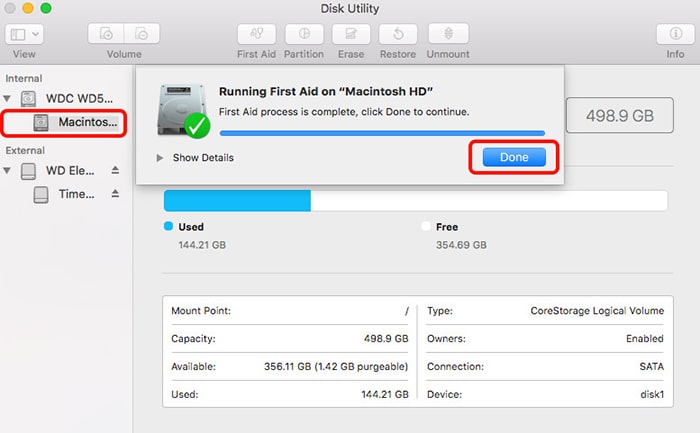
The above listing of activities frequently looks simple, only it isn't. Taking the time and patience to manually make clean up Mac hard bulldoze and perform other tune-upward tasks tin go frustrating. However, learning more about the list of 7 fantastic Mac disk cleaner software is a delight.
3. MAC Difficult DRIVE SPACE IS DISAPPEARING
Problem: Depression free infinite is a concern if Mac has a low chapters storage drive (say 128 GB SSD). "Your startup deejay is well-nigh total" is a standard error in such a situation. Even if essential data is in iCloud and big multimedia files in an external storage drive, Mac storage bulldoze gratis space volition disappear automatically. The low storage happens due to the build-up of junk files, temporary files, caches, logs, and leftovers of uninstalled applications.
Solution: To resolve the drive space disappearing effect, make more than space bachelor on the startup disk by deleting temporary files:
To remove caches:
- Open up Finder from Dock.
- From the Menu Bar, click on Get, then click Habitation.
- Click the cog icon from the top pane and select "Show View Options."
- On the pop-up window, select the "Prove Library Binder" checkbox, and so close it.
- Go to Library > Caches.
- Delete all the caches.
Alternatively, perform the following:
- Open Finder from Dock.
- From the Menu Bar, click on Go, then click "Go to Folder."
- From the dialog window, type ~/Library/Caches, so click Go.
- Delete all the caches.
Also, delete all the temporary files from specific folders present in the Library folder, such every bit Logs, unneeded iTunes files, and Application Support files. Regularly deleting temporary files will increase free space on Mac and prevent the drive space disappearing outcome.
Try Out: SpeedUp Mac 30-days free trial edition
4. MAC HARD DRIVE IS Non SHOWING UP IN THE Disk UTILITY
Problem: The Mac storage drive fails to prove upward in the Disk Utility window.
Solution: Mac hard drive not appearing in the Disk Utility window is 1 of the worst problems a storage device could face. In most cases, the storage device is dead either entirely or partially. Equally far every bit an unmounted Mac hard drive is concerned, the drive all the same appears in the Deejay Utility—though the bulldoze seems to be greyed out.
To mount a greyed out external hard bulldoze, perform the below action:
- Select the drive.
- Printing the Mount push button.
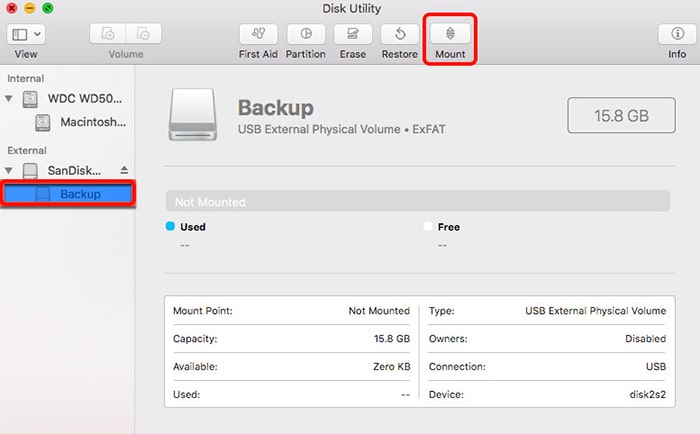
If the above tweak doesn't piece of work, then leverage a free version of Mac information recovery tool to rescue the stored files from the unmounted media, and later the drive can be erased for reuse.
5. Disk UTILITY Tin'T REPAIR MAC HARD DRIVE
Trouble: Using the First Assistance tab present in Deejay Utility, fix hard drive or other storage media for errors, bad sectors, etc. But this is not e'er the example. Sometimes, the message "Disk Utility tin can't repair this deejay" appears. This mistake occurs because Disk Utility fails to repair the storage drive.
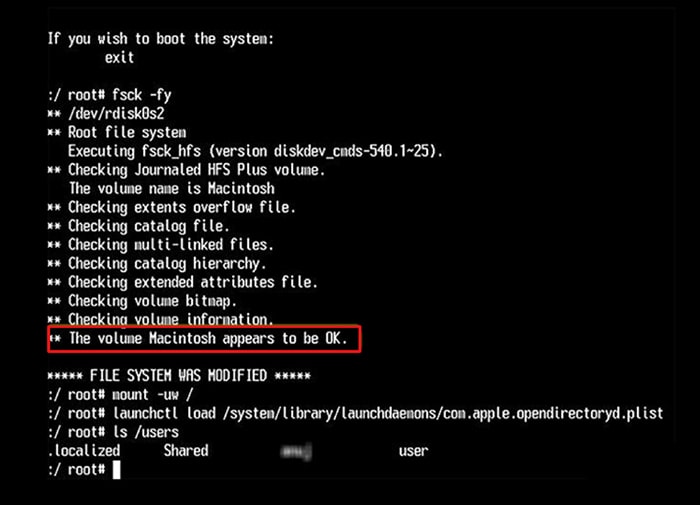
Solution: Use the "file organisation consistency cheque" (fsck) command in Unmarried User Style to review and repair the bones structure of the storage drive. Only, get-go off, back upwardly the drive to another external storage medium to ensure no information loss due to troubleshooting errors. Next, perform the following steps:
- Start or restart Mac, and so immediately press-hold Control + S keys until white text appears on the startup screen. Mac will kicking into Unmarried User Mode.
- On the command prompt, type "fsck –fy" and hitting Return. Don't interrupt till the command finishes, as it can incur data loss.
- When the message "The book was modified" or "The volume Macintosh Hard disk could not be repaired" appears, apply the above command again.
- Use the command multiple times until the message "The volume Macintosh Hd appears to be OK" appears. Blazon exit to restart Mac.
Related Guide: THE NOOB GUIDE TO MAC Difficult Bulldoze RECOVERY
6. MAC EXTERNAL HARD Bulldoze IS Non MOUNTING, UNRECOGNIZED, OR UNREADABLE
Problem: On connecting an external difficult bulldoze to Mac, the drive mounts and shows up on the Desktop. Information technology also appears in Finder. But, sometimes, macOS Big Sur won't detect the external hard bulldoze. So, the drive fails to mountain, is unrecognized, or is not readable on Mac when continued through a USB cable.
Solution: Some common fixes are:
- Unplug and re-plug the drive.
- Endeavor to connect information technology with a unlike USB cable.
- Use a different USB port to connect it.
- Effort connecting it to another Mac.
If none of the above solutions works, there might be something wrong with the external hard drive. Try to support the hard drive via Disk Utility or a 3rd-political party cloning utility then that erasing and reformatting the drive with a new file organization is like shooting fish in a barrel. However, if at that place is no backup of Mac and y'all're unable to clone a troubled hard bulldoze, then opt for a Mac data recovery software to recover data from the unmounting Mac hard bulldoze.
Read Case Study: Stellar® Helps a User to Recover 798 GB Information from Inaccessible External Hard Drive
seven. MAC Hard Bulldoze Information IS LOST PERMANENTLY
Problem: Data loss from a hard drive is inevitable. In that location could be any reason for data loss such as accidental deletion of files and folders, then emptying Trash, erasure of hard drive, physical harm or technical failure of hard drive, virus/malware attack, Mac organization crash, etc.
Solution: Employ the methods presented side by side to restore or recover permanently lost information.
Restore from Fourth dimension Machine: When the backup of Macintosh Hard disk drive is available on an external Fourth dimension Machine fill-in bulldoze, restore lost, deleted, or corrupt files from Time Machine.
- Go to Menu Bar, click Time Automobile, and so click Enter Time Auto.
- Search the lost files or folder by using the Timeline or Upward/Downwards arrow.
- Select all the required items and click Restore.
The files and folders will restore to their original location.

Data Recovery Software: If Time Machine backup is unavailable, employ a information recovery software for Mac to recover the lost data from Mac hard bulldoze. But stop using the drive immediately to prevent whatsoever overwriting. Adjacent, download the trial version of Stellar Data Recovery Professional for Mac on the system.
- Scan the hard drive for recoverable data
- Preview the scanned items.
When satisfied with the recovery effect, activate the software to recover all missing information to a different drive location.
8. MAC Hard Drive'S Sectionalization IS DELETED
Problem: While partition resizing or reformatting, many users written report accidentally deleting their APFS partitions containing essential data. Also, due to partition table damage, technical trouble with the bulldoze, bad sectors, or virus-attack on i or more hard drives, partitions can get accidentally deleted.
Solution: Restore the lost or deleted sectionalisation with the help of Time Machine fill-in. However, in the absence of backup, utilise Stellar Information Recovery Professional for Mac software to find the deleted sectionalisation(due south) with the help of Can't find Volume feature.
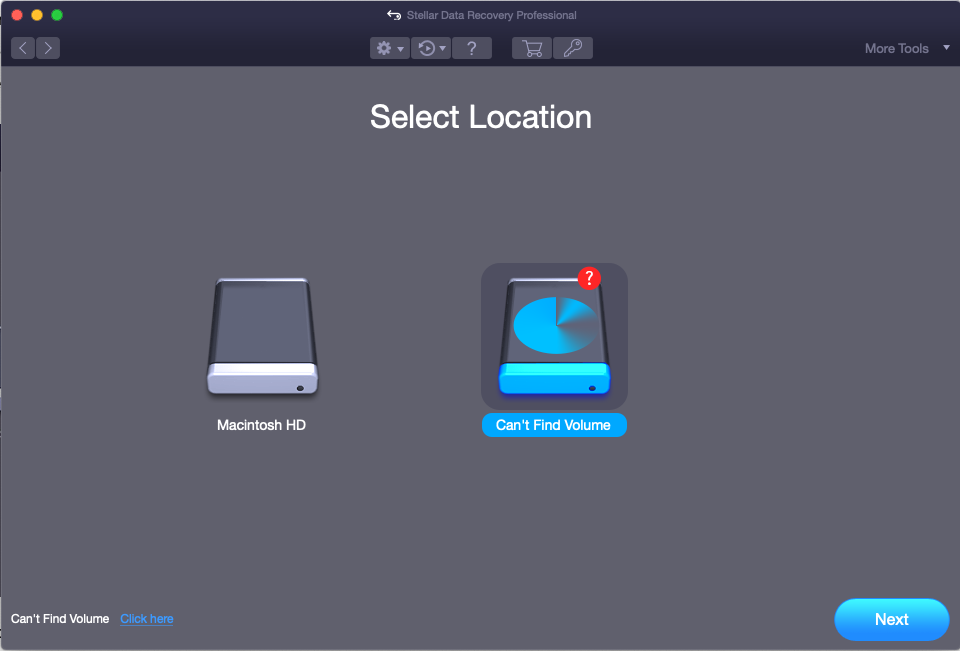
This feature helps locate deleted partitions on any APFS, HFS, HFS+, Fatty, NTFS, or ex-Fatty file-system-based storage drive. It can speedily revive deleted volumes on iMac, Mac Pro, MacBook Pro, MacBook Air, or Mac mini. Likewise, if the volume(s) on Mac fails to mount, then this software helps recover the partition data quickly.
9. MAC Difficult DRIVE IS Non BOOTING
Trouble: Sometimes, Mac difficult drive won't kicking. This effect could happen due to file organisation corruption, bad sectors, electronic component impairment, or other hard drive bug. As a result, all valuable photos, videos, documents, and other files stored on Mac drive turn inaccessible.
Solution: Implement the following methods to get back information from a non-booting Mac.
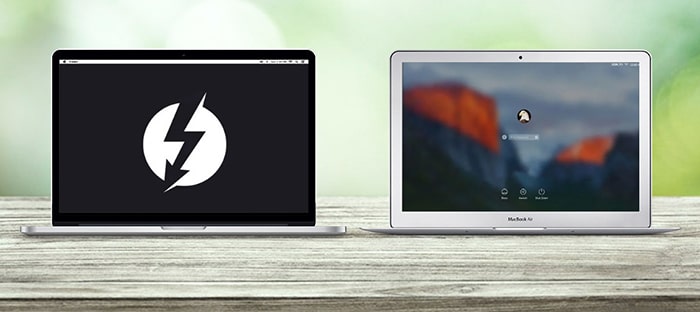
Access non-booting Mac using Target Disk: Connect the non-booting Mac to a working Mac using a FireWire or Thunderbolt cable. Power on the working Mac. Next, turn on the non-booting Mac, then immediately printing and concur the T key. Release the central when FireWire or Thunderbolt icon appears. Access the non-booting Mac hard drive from the working Mac.
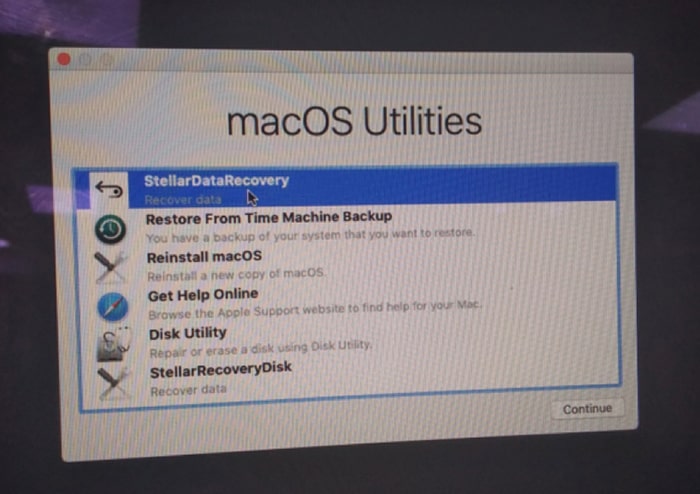
Use Fourth dimension Machine Backup: If Time Machine backup is available, connect the backup drive to the not-booting Mac. Next, power on the Mac and press-hold the Command + R keys. Release them when the Apple logo appears. Mac enters macOS Recovery mode. From the macOS Utilities window, click Restore from Time Machine Backup, then click Continue. Perform the on-screen instructions to erase Mac hard drive, reinstall macOS, and restore information from the Time Car backup drive.
Boot non-booting Mac by using recovery drive: Download, install, and activate Stellar Data Recovery Professional for Mac on some other working MacBook, iMac, or Mac mini. Next, create a recovery drive using at to the lowest degree an 8 GB pollex drive. Connect the kicking drive to the non-booting Mac. Ability on the Mac, then press-concord the Option key. Release it when the Startup Managing director opens. Next, choose the Recovery Bulldoze. In the macOS Utilities window, select Stellar Data Recovery, then click Keep. Utilize the on-screen instructions to recover information from the non-booting Mac.
Read More: How to recover data from a non-booting Mac
10. MAC Hard Drive IS MAKING A CLICKING NOISE
Problem: Mac difficult drives typically contain platters on which a magnetic arm reads/writes information. The platters can get damaged by drop or jerk. If a clicking noise comes from Mac hard drive when Mac boots, the hard drive has physical damage.
Solution: In such a scenario, there isn't much to do except:
- Back up all essential data.
- Run the Apple Hardware Test.
- If backing upwardly of Mac isn't feasible, employ Disk Utility'due south disk imaging to clone the drive.
Probably, in that location is a need to replace the difficult drive with a new i or at least go it checked past experts. DO Non endeavor to open the drive to further the impairment and lead to permanent data loss.
11. MAC Hard Drive IS NOT DETECTED IN WINDOWS
Problem: On connecting a Mac-based storage drive on a Windows PC, the drive won't appear on File Explorer. This event arises due to the incompatibility of file systems. The storage bulldoze is in APFS or HFS+ file system format, which is compatible exclusively with macOS. No other operating system is harmonious with the proprietary file system format of Apple.
Solution: To fix the upshot, do the post-obit:
- Back up all the data from the storage bulldoze from its compatible operating arrangement.
- Format the bulldoze in the ex-FAT file arrangement. (Or format a USB wink bulldoze in FAT32, but information technology volition only allow storing files with a size limit of 4 GB.)
- Restore the backed-upward information to the storage drive.
Now, utilize the storage drive in both Mac equally well as Windows computers. Windows tin can read-write on ex-Fatty and FAT32 file organisation formatted storage drive.
Related Article: How to Recover Data from Mac Hard Drive on Windows
12. UNABLE TO Sectionalization MAC HARD DRIVE
Problem: Sectionalization a difficult bulldoze is a reasonably simple task by using Disk Utility. Merely sometimes, Disk Utility fails to create partitions on a difficult bulldoze or perform other sectionalization-related operations.
Solution: If the control-line interface isn't a deterrent, use diskpart command in Terminal to partition Mac hard drive. Check its manual for parameters and steps. Or else, employ a deejay partitioning software to create partitions, delete partitions, format partitions, resize partitions, hide or reveal partitions, etc.
Read More: How to partition macOS startup disk?
xiii. BAD SECTORS IN MAC HARD Drive
Problem: Detecting bad sectors on a difficult bulldoze isn't like shooting fish in a barrel. But when some information of a sudden goes missing or the bulldoze throws an mistake accessing a file, suspect that the Mac hard drive has started developing bad sectors. For case, on trying to access a recently saved file, macOS throws an I/O error: the file tin no longer be read due to a bad block.
Solution: At that place are several fixes to this problem:
- Check the SMART status of the hard bulldoze by using Deejay Utility.
- Boot into macOS Recovery mode, so go to Disk Utility > First Assist. Click Run to repair the hard drive. Proceed running First Help until information technology says at that place are no errors.
- If the repair doesn't work, back up the Mac storage drive, erase it, and restore the backup.
fourteen. MAC Difficult Bulldoze HAS FAILED SMART Condition
Problem: Mac difficult drive uses SMART (aka Self-Monitoring, Analysis, and Reporting Technology) to monitor internal disks and check for issues. If the SMART check on the Mac hard bulldoze reports error or failure, it usually means the difficult drive is about to fail permanently.
Solution: There still might exist promise for the hard drive. To check all recovery possibilities, follow these steps:
- For an external hard drive, open Disk Utility, then select the failing difficult bulldoze from the left pane. Click Get-go Assist and so click Run to initiate the repair process.
- For startup disk (Macintosh Hd), start or restart the Mac and immediately, printing-concur the Command + R keys. Release the keys when the Apple logo appears. On the macOS Utilities window, select Disk Utility, then click Proceed. Select the startup disk from the left pane and click First Aid. Click Run to repair the startup disk.
- If the repair process doesn't work, support all the files present on the hard drive and so erase the drive.
- In one case the erase operation completes, check the disk'southward SMART condition, and it should ideally prove the hard drive equally "Verified."
If none of the above solutions work, repair the hard drive or replace it with a new 1.
Read More: Premium Storage Drive Monitoring Software for Mac
15. MAC EXTERNAL HARD Drive IS EJECTING ITSELF
Problem: Some Mac users have tried replacing their Mac CD/DVD drive with a large-chapters hard drive. Past doing this, they have augmented their Mac's storage chapters. But auto hard drive ejection issue appears afterwards a few minutes of drive idleness.
Solution: To resolve the eject issue, tweak the power management settings of Mac, as shown hither:
- Go to Finder > Applications > Utilities > Terminal.
- On Last, type "pmset –yard | grep disksleep" and hit Render.
- Check the value of disksleep. If it is depression, provide a pregnant number.
- Type "sudo pmset –a disksleep #" (hither, replace # with a suitable number) and hit Return.
- Provide the admin countersign when prompted.
- Check the changed sleep value using the "pmset –g | grep disksleep" control.
The higher up solution will fix the bulldoze machine-eject problem. At present, use the hard drive to relieve and access data as usual.
sixteen. MAC HARD Drive'S ENCRYPTION Password IS LOST
Problem: Many Mac users use Apple FileVault to encrypt information on their Mac startup disk. FileVault uses XTS-AES-128 encryption with a 256-flake key to help prevent unauthorized access to the information on the startup disk. But every encryption works in conjunction with a decryption key that decrypts the information before it can exist accessed. Mostly, this decryption cardinal is a called password. If the Mac users lose or forget their decryption password, they lose access to their data permanently.
Solution: Make sure the password is typed correctly. Plow off the Caps Lock and choose the Show Countersign option just to be completely sure. If admission is denied, try one of these:
- If the countersign field shows a question marking, click it to display a password hint. The hint might assistance to think the forgotten countersign.
- Try to log in with the Apple tree ID password.
- Utilize Apple ID to reset the password, which so resets the keychain.
- Have an administrator reset the login password.
- Employ the recovery central obtained during FileVault deejay encryption.
- Reset password using the Reset Countersign assistant.
If none of the above steps works, contact Apple Support for help!
17. REMOVE HARD Bulldoze ENCRYPTION
Trouble: How to remove hard bulldoze encryption on Mac?
Solution: If Mac internal startup disk is encrypted using FileVault and encryption is no longer required, remove the hard drive encryption using the following steps:
- Go to Apple tree menu > System Preferences > Security & Privacy. Click the FileVault tab.
- Click the lock icon and enter the ambassador name & countersign to change preferences.
- Click Turn Off FileVault to decrypt the Mac startup disk in the groundwork.
The decryption of the startup drive occurs when the laptop is awake and is continued to its power source. Use the FileVault department of the Security & Privacy preferences window to check the decryption progress. In one case done, the hard drive no longer requires a password to access its stored content.
If the not-startup book or external hard drive is encrypted through Finder that creates a password-protected bulldoze, you need to remove the hard drive encryption using the post-obit steps:
- Launch Finder and select the non-startup volume or external hard bulldoze from the sidebar.
- Secondary-click on the selected drive icon and cull Decrypt .
- Enter the password that was provided at the time of encryption.
The decryption process begins, and its status can be checked from the context menu by secondary-clicking the bulldoze icon from Finder. When the process is over, admission the volume or external difficult drive without inbound any password.
Related Blog for Problem #16 and #17: How to Encrypt, Decrypt, and Recover Deleted Files
eighteen. Difficult Drive WON'T FORMAT
Trouble: On trying to erase Mac, the internal hard drive won't get formatted to the chosen file arrangement. Sometimes, Disk Utility can't erase the external disk due to some technical challenge.
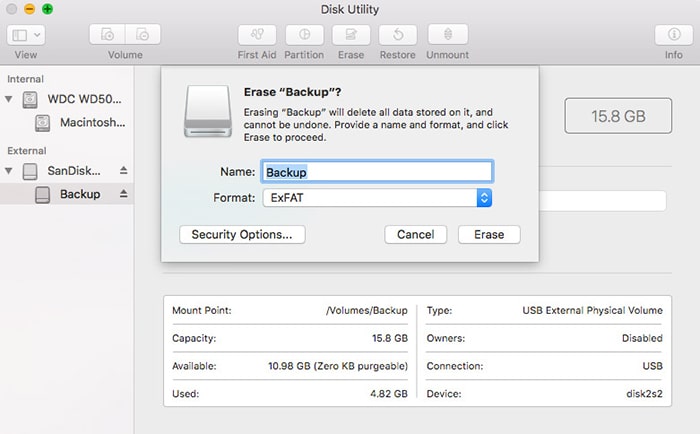
Solution: The format challenge arises because the internal Mac startup disk is in apply and won't format. Erase the startup disk (Macintosh HD) using Disk Utility in macOS Recovery mode or a bootable installer drive (CD, DVD, or USB flash bulldoze.) The problem won't bother once more.
19. I Tin can'T FIND FILES ON A Hard Bulldoze
Problem: Sometimes, a Mac user can't notice files on a hard drive using the Finder window.
Solution: This issue is 1 of the worst problems faced by Mac users. The files may be subconscious, are nowadays in the hidden library folder, or are deleted. Notice the files using the following methods:
- In the Finder location, press Command + Shift + . (Dot) hotkey to unhide whatsoever hidden files.
- Navigate to Go > Get to Folder and enter any hidden binder path to access files.
- Go to Trash and expect for the files.
- Open Finder location, and then go to Time Machine > Enter Time Automobile to access the files.
- Utilize a file recovery tool to scan and recover the files that can't exist constitute on a hard drive.
20. WD DRIVE DETECTED IN Deejay UTILITY BUT Non IN FINDER AND DESKTOP
Problem: When an external WD hard drive is connected to Mac, the drive isn't visible on the Desktop and in the sidebar of the Finder window simply is detected in Disk Utility.
Solution: This is a elementary preference setting issue and tin be stock-still using the following steps:
- Click the Finder icon from Dock.
- Using the Menu bar, navigate to Finder > Preferences.
- Click the General tab.
- Under Show these items on the Desktop, select External Drives.
- Click the Sidebar tab.
- Under Show these items in the sidebar, select External Drives.
At present, WD external hard bulldoze volition be visible on the Desktop and in Finder's sidebar as usual.
21. MAC EXTERNAL HARD Bulldoze IS READ-ONLY
Problem: macOS allows reading of the stored content from a continued external hard drive but denies saving files to the drive.
Solution: This problem could occur when an NTFS formatted external hard is connected to Mac. Follow the given method to solve the problem:
- Use a free tertiary-party driver, say FUSE for macOS.
- Or else, use a paid tertiary-political party commuter, say Microsoft NTFS for Mac by Paragon Software.
The in a higher place driver allows the reading and writing of files on an NTFS formatted hard drive on Mac.
22. MAC EXTERNAL HARD Drive SLEEPS
Trouble: The external hard drive sleeps automatically when the Mac user is not performing any operation. macOS turns off the difficult-drive motor to salvage energy.
Solution: This Mac external difficult bulldoze sleep trouble can exist solved using the following steps:
- Navigate to Apple carte > Arrangement Preferences > Energy Saver.
- In the Free energy Saver window, unselect the "Put difficult disks to sleep when possible" checkbox.
The external hard drive will remain active and won't slumber. This preference doesn't affect SSD, as information technology has no moving parts.
Read More: Resolve Mac External Hard Drive Sleep Problem
23. MAC Request TO INITIALIZE Difficult Bulldoze
Trouble: On connecting an external drive using a USB cable, Mac asks to initialize the hard bulldoze.
Solution: The initialize hard bulldoze message window appears when the file system format of the drive is incompatible with macOS or the bulldoze'south file organisation is decadent. Don't click the Initialize button, as macOS will erase the incompatible or decadent difficult bulldoze with a new file system format, and all the stored content on the hard drive will be lost. Instead, click the Ignore button.
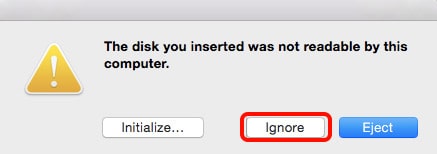
Now, check the file arrangement format of the hard drive using Disk Utility. If the drive's file system is incompatible with macOS, use a figurer that supports that file organization and re-create files to the arrangement. Next, erase the hard drive with a file organisation that is compatible with both systems.
Else, if the difficult bulldoze's file system is compatible with macOS merely is decadent, recover the data present on the drive using a Mac data recovery professional software. Once information is retrieved from the corrupt hard drive, initialize the drive as prompted. Or else, erase the drive using Deejay Utility to fix the corruption issue.
Finally, restore the recovered data to the external storage medium. The drive is set up for use without any problem.
24. ENDING NOTE
We hope the guide helped troubleshoot the worst issues with Mac difficult drive, solid-country drive, or other storage drives and partitions. Every bit a all-time exercise, perform the following:
- Dorsum upwardly Mac using Time Machine before any critical troubleshooting.
- Replace failed Mac hard drive with SSD and restore Mac from backup.
- Employ a data recovery tool to get back lost data. Offset with a free one GB recovery trial.
- Create a USB recovery drive and preserve it to retrieve information from a crashed Mac.
For more data related to software, inquire queries via the author's email or chatbox.
Source: https://www.stellarinfo.com/article/mac-hard-drive-problems-with-solutions.php
0 Response to "Machard Drive Fail Then Work Again Serious Issue"
Post a Comment